Beginning with Lesson planning with AI, the narrative unfolds in a compelling and distinctive manner, drawing readers into a story that promises to be both engaging and uniquely memorable.
This innovative approach harnesses the power of artificial intelligence to streamline lesson planning processes, making curriculum development more efficient and tailored to individual learning needs. By integrating AI tools, educators can create personalized and engaging educational experiences that enhance student engagement and monitoring of progress, ensuring that every learner’s journey is both effective and enjoyable.
Utilizing AI for Lesson Planning
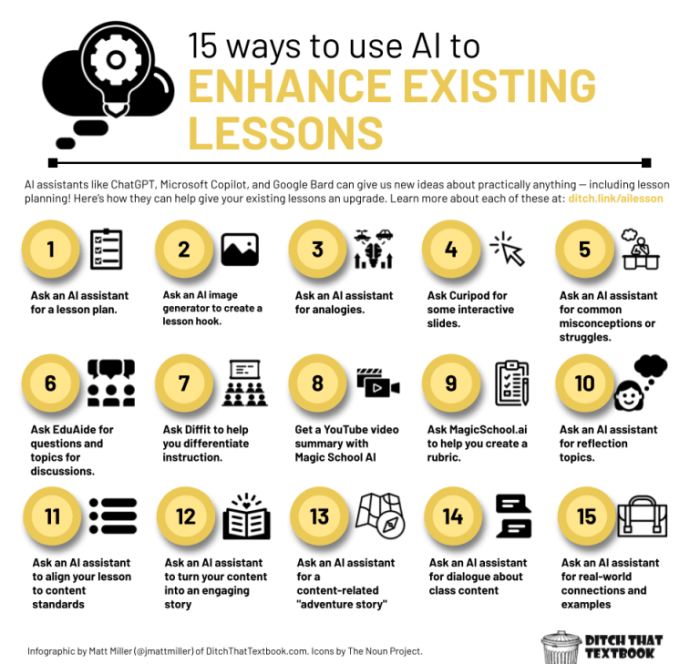
Artificial Intelligence (AI) has transformed various sectors, and education is no exception. By integrating AI into lesson planning, educators can streamline their processes, enhance curriculum development, and create personalized learning experiences for their students. The combination of technology and educational methodologies results in more effective and engaging learning environments.AI can significantly simplify the lesson planning process by automating repetitive tasks and providing data-driven insights.
This enables educators to focus on what truly matters: teaching. AI tools can analyze student performance data, suggest relevant resources, and even assist in creating assessments tailored to specific learning objectives. By leveraging AI, educators can save time and energy while ensuring that their lesson plans are both comprehensive and aligned with curriculum standards.
Methods for Integrating AI Tools into Curriculum Development
Incorporating AI tools into curriculum development requires thoughtful strategies to maximize their potential. Here are several methods to consider:
- Data Analysis for Curriculum Design: AI tools can analyze large datasets on student performance to identify trends and gaps in learning. By using this data, educators can design curricula that address specific needs, ensuring that all students are adequately supported.
- Resource Recommendations: AI can curate educational resources that match the curriculum goals. By simply inputting a topic or learning objective, educators can receive a tailored list of articles, videos, and interactive activities to enhance their lesson plans.
- Automated Assessment Generation: AI can help create assessments that are aligned with the curriculum. Teachers can input specific learning outcomes, and the AI can generate quizzes or tests that evaluate students’ understanding effectively.
- Feedback Mechanisms: AI-driven platforms can provide instant feedback to students, enabling them to understand their strengths and areas for improvement. This immediate response encourages a growth mindset and promotes a more engaged learning experience.
Benefits of Using AI in Creating Personalized Learning Experiences
One of the most significant advantages of AI in education is its ability to create personalized learning experiences. This customization can lead to increased student engagement and improved outcomes. Key benefits include:
- Adaptive Learning Systems: AI can create adaptive learning paths for students, adjusting the difficulty and type of content based on their individual progress. This ensures that each student is challenged at an appropriate level, promoting effective learning.
- Learning Analytics: By analyzing how students interact with learning materials, AI can identify which strategies are most effective for different learners. Educators can use this information to tailor their teaching approaches and foster a more supportive learning environment.
- On-Demand Resources: AI-powered educational platforms can provide resources and support to students outside of traditional classroom hours. This flexibility allows learners to access materials that cater to their unique needs at their convenience.
- Engagement and Motivation: Personalized learning experiences foster student autonomy and motivation, as students feel more in control of their learning journey. This leads to a more invested and enthusiastic approach to education.
Enhancing Educational Engagement with AI
The integration of AI into educational settings presents exciting opportunities to enhance engagement and learning outcomes. By leveraging advanced technologies, educators can create tailored experiences that resonate with students, making the learning process more interactive and enjoyable. The use of AI not only aids in developing content but also plays a crucial role in monitoring progress and adapting lessons to meet diverse needs.
Strategies for Creating Engaging Educational Content
Utilizing AI tools can significantly enrich educational content, making it more engaging for students. Here are some strategies educators can adopt:
- Personalized Learning Paths: AI can analyze student data and interests to create customized learning experiences that cater to individual preferences, which fosters greater engagement.
- Interactive Simulations: Implementing AI-driven simulations in subjects like science or history allows students to explore concepts in a dynamic environment, enhancing comprehension through experiential learning.
- Gamification: Integrating AI with game design elements can transform traditional lessons into exciting challenges, motivating students through rewards and achievements.
- Adaptive Quizzes and Activities: AI can generate quizzes that adapt to the learner’s level, providing immediate feedback and adjusting difficulty based on performance, keeping students challenged yet supported.
Monitoring Student Progress and Adapting Lessons with AI
AI technologies are pivotal in tracking student progress and informing instructional adjustments. The ability to collect and analyze data in real time aids educators in understanding each student’s unique learning journey.
- Data-Driven Insights: AI can compile assessment results and participation metrics, offering teachers clear insights into areas where students excel or struggle.
- Predictive Analytics: By utilizing historical data, AI can forecast potential learning outcomes, allowing educators to proactively intervene before a student falls behind.
- Instant Feedback Mechanisms: AI tools can provide real-time feedback on assignments, enabling students to reflect and improve before final assessments.
- Curriculum Adaptation: AI systems can recommend curriculum changes based on collective student performance trends, ensuring that content remains relevant and effective.
Examples of Interactive Lesson Plans Incorporating AI Technologies
Creating interactive lesson plans that utilize AI can greatly enhance student engagement. Below are examples illustrating how AI technologies can be woven into lesson structures across different subjects:
- Science Lesson: Virtual Reality Exploration
-Students use VR headsets powered by AI to explore the solar system. AI adjusts the experience based on their reactions, providing tailored insights about planets they show interest in. - Language Arts Lesson: AI Writing Assistant
-Students engage in writing activities with an AI writing assistant that offers suggestions and prompts, enhancing their creativity while providing instant feedback on grammar and style. - Mathematics Lesson: Adaptive Problem Sets
-An AI platform assesses student performance in real-time and generates math problems that adjust in complexity based on the student’s understanding, ensuring they remain challenged without frustration. - History Lesson: Interactive Timelines
-Utilizing AI, students can create dynamic timelines of historical events, where AI suggests related themes or important figures based on their selections, promoting deeper investigation.
Future Trends in AI and Education
Advancements in artificial intelligence (AI) are set to revolutionize the field of education and lesson planning. As educators increasingly embrace technology, the integration of AI tools will enhance personalized learning experiences, streamline administrative tasks, and provide deeper insights into student performance. The future of AI in education promises not only efficiency but also a transformative approach to how lessons are crafted and delivered.One of the most significant trends is the potential for more sophisticated AI algorithms capable of analyzing vast amounts of data to tailor lessons to individual student needs.
These advancements will lead to more responsive lesson planning, allowing educators to adapt content based on real-time feedback and learning analytics. As AI becomes better at understanding student preferences and learning styles, it will facilitate customized educational pathways that promote engagement and retention.
Comparison of Traditional vs. AI-Assisted Lesson Planning Methodologies
Understanding the differences between traditional lesson planning and AI-assisted methodologies highlights the benefits of incorporating technology into education. Traditional methods often rely on standardized curricula and teacher experience, which can limit adaptability to individual student needs. In contrast, AI-assisted lesson planning leverages data and machine learning to create dynamic and personalized learning experiences.Key differences include:
- Data Utilization: Traditional lesson planning typically draws from pre-defined resources and assessments, whereas AI-assisted approaches analyze student data, providing real-time insights to inform lesson adjustments.
- Personalization: Traditional methods offer limited personalization, often leading to a one-size-fits-all approach. AI adapts lessons based on student engagement levels, performance metrics, and learning preferences, enhancing individual learning experiences.
- Time Efficiency: Traditional planning can be time-consuming, often requiring extensive preparation. AI tools automate much of the administrative workload, allowing educators to focus more on teaching and nurturing student relationships.
- Feedback Mechanisms: In traditional settings, feedback is generally periodic and may not reflect the most current student performance. AI systems can provide immediate feedback, enabling timely interventions to support student progress.
Ethical Considerations of Using AI in Educational Settings
The integration of AI in education raises several ethical concerns that must be addressed to ensure a fair and equitable learning environment. As AI systems gather and analyze vast amounts of student data, there is a pressing need to safeguard privacy and ensure data security.Important ethical considerations include:
- Data Privacy: The collection and use of student data must comply with privacy laws and regulations. Educators should be transparent about what data is collected and how it will be used.
- Bias and Equity: AI algorithms can unintentionally perpetuate biases present in training data. It is crucial to ensure that AI systems are designed to promote equity and inclusiveness in educational opportunities.
- Informed Consent: Students and parents should be informed about how AI tools are being used in the educational context, allowing them to make knowledgeable decisions regarding participation.
- Accountability: There must be clear accountability mechanisms in place for decisions made by AI systems, ensuring that educators remain the ultimate authority in pedagogical practices.
Last Recap

In summary, the integration of AI in lesson planning presents a transformative opportunity for educators to redefine their teaching methodologies. As we embrace these advancements, we can anticipate a future where personalized learning becomes the norm, paving the way for more dynamic and responsive educational environments. The discussion surrounding AI in education continues to evolve, reminding us of the balance between technological innovation and ethical considerations we must uphold.
Essential FAQs
How can AI improve lesson planning?
AI can streamline the process by automating repetitive tasks, providing data-driven insights, and enabling personalized content creation.
What tools can be used for AI-driven lesson planning?
Tools like AI-based curriculum generators, learning management systems with AI features, and data analysis software can significantly enhance lesson planning.
Are there any limitations to using AI in education?
Yes, limitations include potential biases in AI algorithms, the need for teacher training on new tools, and concerns about data privacy.
How does AI personalize learning experiences?
AI personalizes learning by analyzing student data to tailor content and instructional methods that fit individual learning styles and paces.
What ethical considerations should educators keep in mind?
Educators should consider issues of data privacy, algorithmic bias, and the importance of maintaining the human element in teaching.